A lack of context in jewelry is an invisible barrier to sales
In the jewelry category, the shopper often loves the design of the product but delays the purchase decision because they can’t gauge its size, posture, and how it would look on them. Especially for products like rings, earrings, and necklaces, a photo of the product standing alone may be aesthetic; however, it may not make the decision easier. That’s because the shopper wants to see not the “object” state of the jewelry, but the “how does it look on me” state.
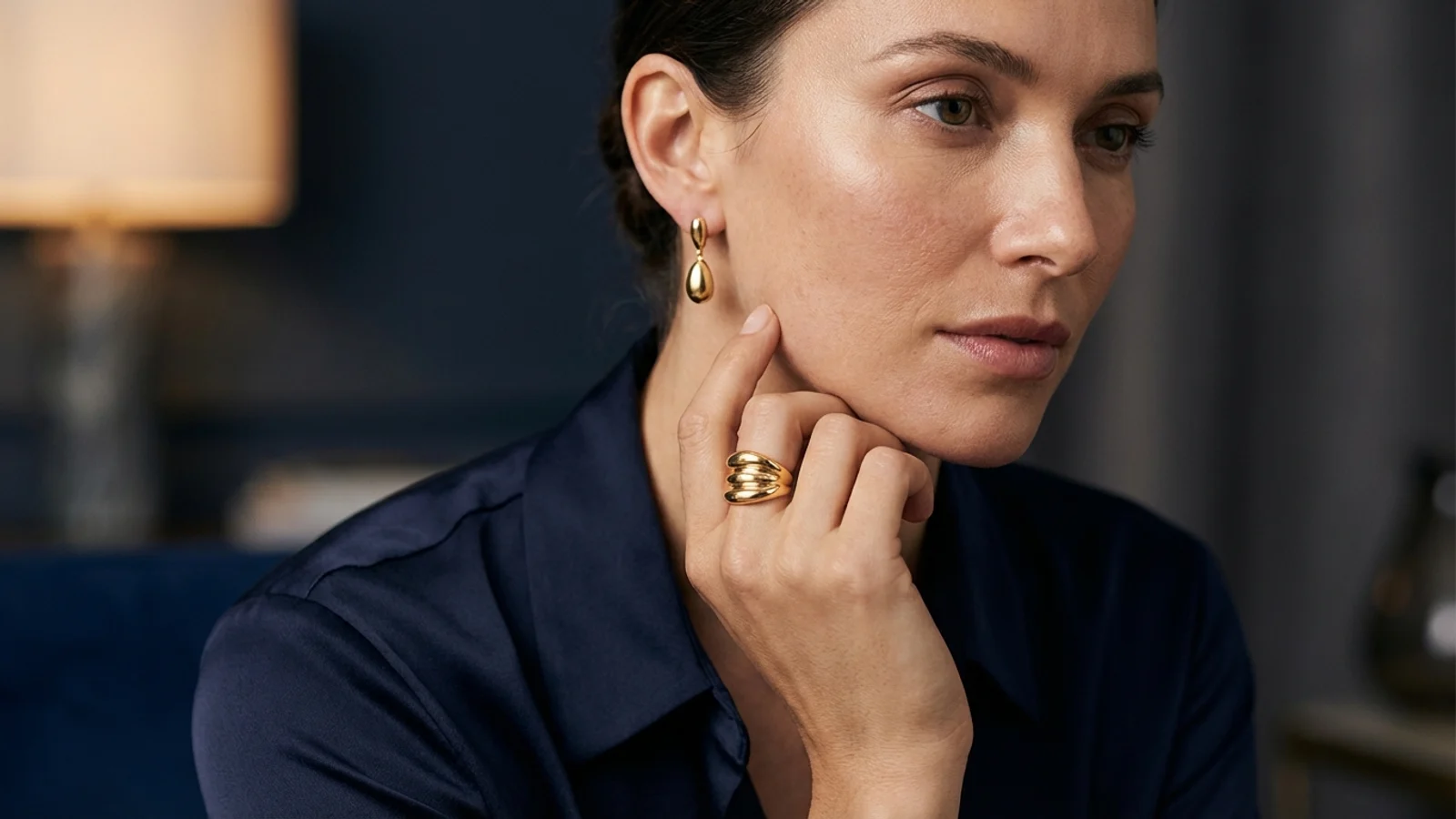
This is exactly where putting jewelry on a model creates value. When the product is carried to the ear, finger, or neck, a sense of scale forms. The shopper more easily understands the size of the stone and the relationship of the form to the face or hand. This makes it easier for the product to come alive in their mind.
The effect of increasing perceived quality
Jewelry shown on a model tends to be perceived as more premium. The reason is not just aesthetics; showing the product in a usage context makes it more real and more desirable. This effect is more pronounced especially in the luxury or semi-luxury segment. With a well-chosen model, good lighting, and the right crop, a layer of value forms around the jewelry product.
However, the critical line here is this: the model should not overpower the product. The shopper should focus on the jewelry, not on the model’s face or the styling. The best model-based jewelry visuals use the human element for context but ensure the product remains the star.
In which jewelry categories does it work more strongly?
Putting jewelry on a model makes the most difference in the earring, necklace, ring, and bracelet categories. That’s because the biggest problem with these products is a lack of information about size and posture. The proportion of an earring to the ear, the length of a necklace on the neck, and the volume of a ring on the finger become more visually understandable.
This effect increases even more in products sold as sets. The shopper sees a combination rather than individual objects. For example, seeing an earring and a ring used together on the same model can positively affect the average basket size. For this reason, model-based jewelry visuals are valuable not just for conversion, but also on the cross-sell side.
The right usage model for increasing sales
Putting jewelry on a model delivers the best results when used together with flat product visuals. In other words, your main product image can still be understated; but the additional visuals can feature model-based usage. This way, the shopper sees both the product’s detail and the sense of usage. Relying solely on a model visual on its own can sometimes leave product information incomplete.
In practice, the best set is this: a flat product photo, a close-up detail, a model-based usage, and, if available, a set combination visual. AI tools make it easier to build this structure at scale. This provides a serious time advantage especially for jewelry brands in Turkey that work with many SKUs.
Sources