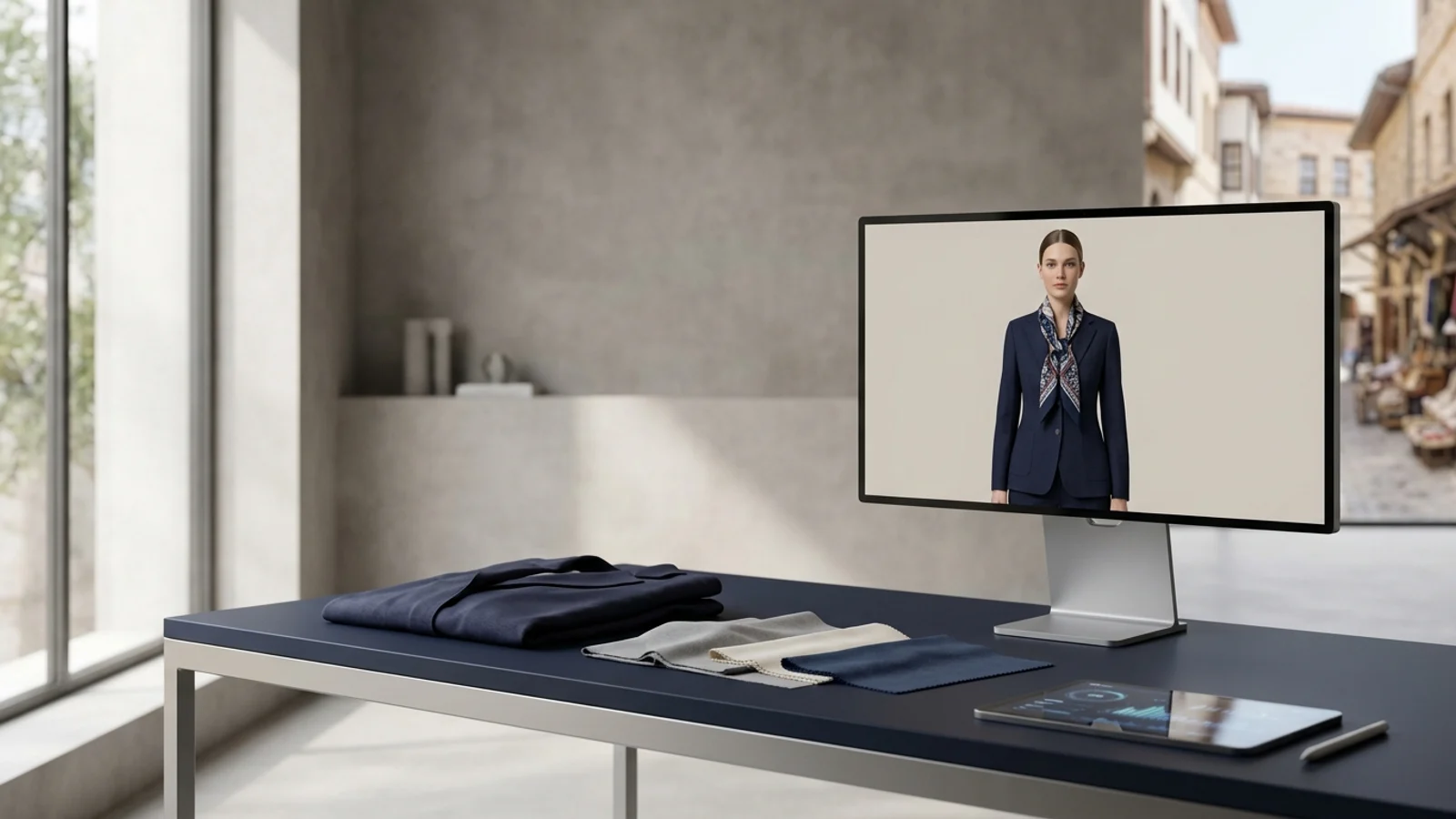
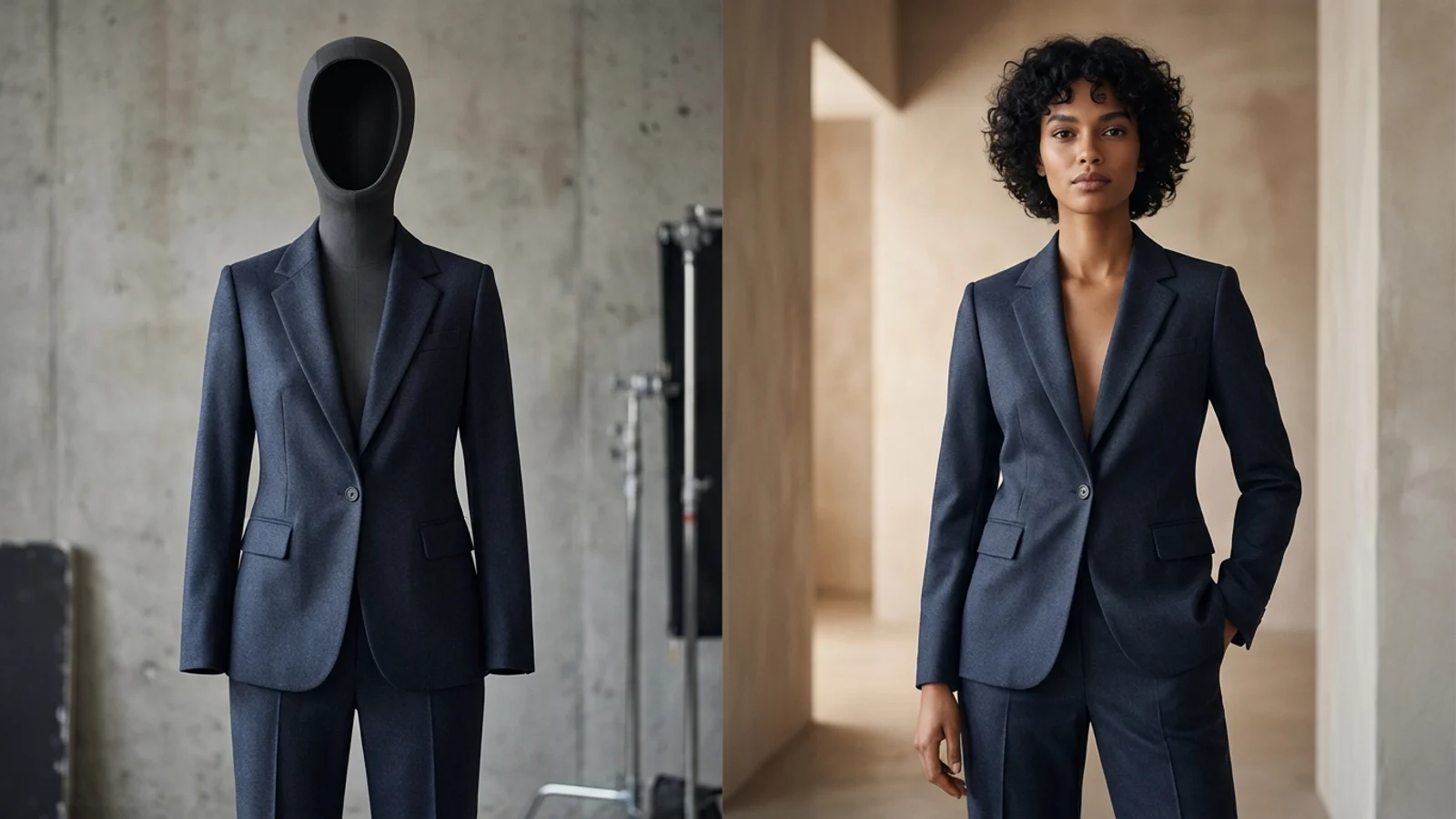
Start with the goal: product explanation or sense of wear?
When deciding between these two methods, the first question is this: what do you want to show the shopper? If the goal is to neutrally show the product’s structure, shoulder shape, collar detail, and overall cut, the ghost mannequin is more appropriate. If the goal is to convey how the product looks on a real person, what kind of style feeling it creates, and how it matches the target audience, the virtual mannequin comes to the fore.
In other words, the issue isn’t “which one is more modern,” but rather which content serves which purpose. When ecommerce teams make this distinction, visual decisions become much clearer. Otherwise, you either lean unnecessarily on model-based visuals, or the product ends up looking too technical and soulless.
Differences in terms of operations and cost
The ghost mannequin is usually tied to a more classic production flow. The garment has to be placed neatly on the mannequin, the inner section shot separately, and then the two combined through retouching. On the virtual mannequin side, more flexible variation production can be possible with a well-prepared product image and the right model direction. The virtual mannequin offers a scaling advantage especially when different model types or different scenes are involved.
However, the assumption that it will always be cheaper or easier isn’t accurate either. If the product type makes it harder for AI to process correctly, quality control time can increase. That’s why the real cost calculation should be evaluated not just by the per-production price, but together with team time and revision needs.
Evaluation in terms of sales and brand perception
The virtual mannequin can offer a more editorial and more vibrant experience, especially for fashion brands targeting a younger audience. It’s powerful for campaign pages, advertising creatives, and collection launches. The shopper sees what kind of style the product turns into. This makes the product perceived not just as something technical, but as a desirable object.
The ghost mannequin, on the other hand, establishes a more controlled, more understated, and more catalog-focused language. It provides a more standardized appearance especially in stores with a very high product variety. The sales impact of both methods is high when used in the right place. The problem usually comes from using the wrong method in the wrong place.
The best solution is often hybrid
For many brands, the ideal solution isn’t making a sharp choice between ghost mannequin and virtual mannequin. Using a ghost mannequin on the product page and a virtual mannequin on the lookbook and advertising side creates a very powerful combination. This way, the shopper sees both the product’s true form and gets a feel for the usage context.
This hybrid approach works especially well for brands in Turkey that manage both a marketplace and a D2C site. More understated and explanatory visuals can be used on the marketplace, while richer and more style-focused visuals are used on the brand’s own site. In the end, the best method is the one that differentiates by channel and category.
Sources