Why isn’t a single flat product photo enough?
In the eyewear category, shoppers don’t just look at the aesthetics of the frame; they also want to understand how the product will sit on their own face. A flat product shot is limited in this respect. Frame width, lens height, and overall style only fully make sense in relation to a face. That’s why deciding based on a product photo of the item sitting on a table alone is difficult for many shoppers.
This uncertainty grows even larger in online shopping, where there’s no chance to try the product physically. This is exactly where showing the product on different face shapes comes into play. When shoppers see the face shape closest to their own, the product comes to life in their mind more quickly and the barrier to purchase drops.
Why does face-shape variety build trust?
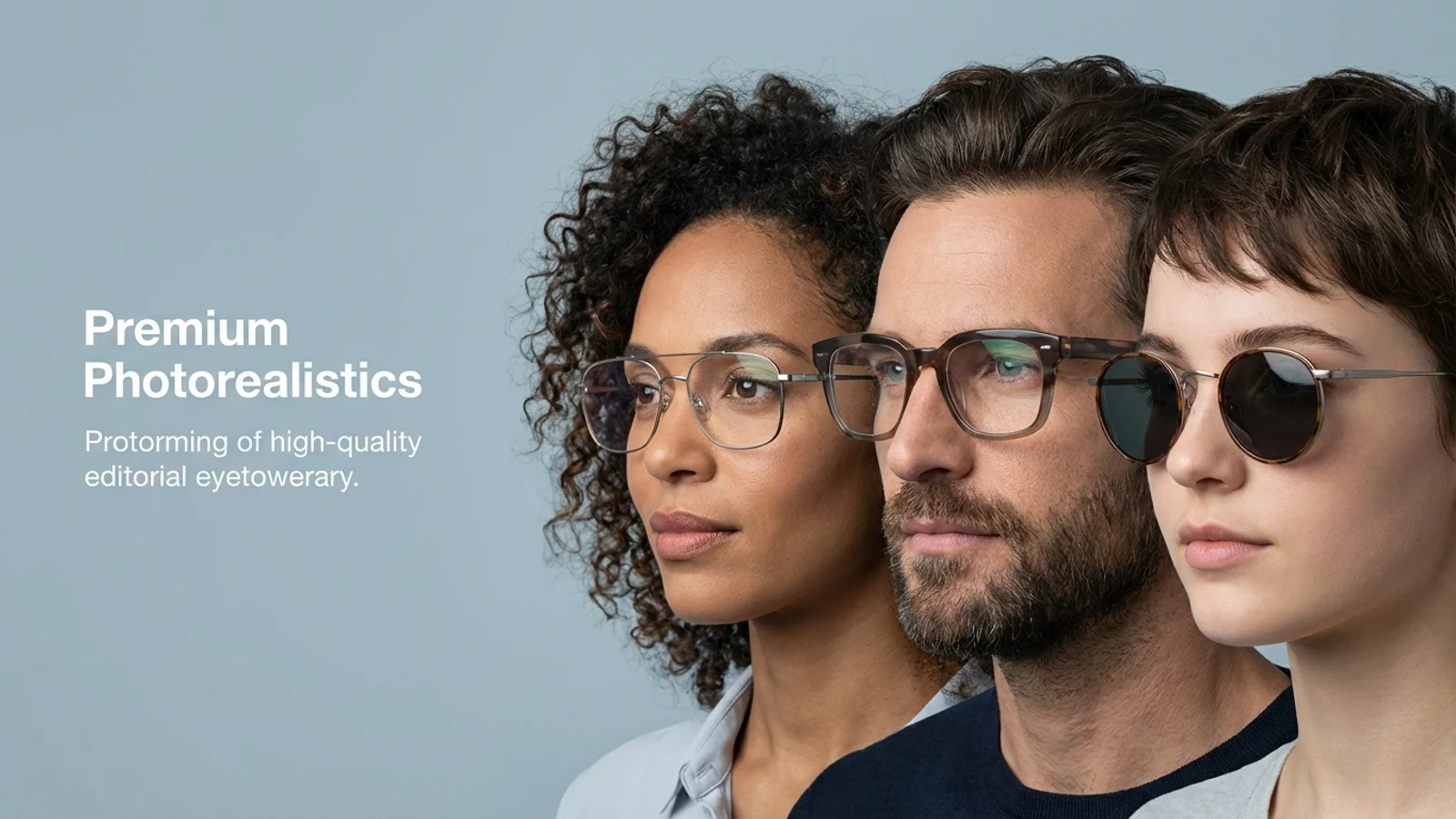
Glasses shown on different face shapes give the impression that the brand understands its customers, because a single model can’t represent every audience. Variables such as a narrower face, a wider face, prominent cheekbones, or different nose structures all affect how glasses are perceived. This variety gives shoppers the feeling that “this product could work for me too.”
This sense of trust isn’t only about aesthetics. It’s also about managing expectations. A product shown on different face shapes offers a more realistic shopping experience that can reduce the likelihood of returns. Shoppers can size the product against themselves more accurately.
How does AI scale this process?
Showing the same pair of glasses on many different models using traditional methods is costly and time-consuming. AI tools that fit glasses onto a model make this process far more agile. It becomes possible to show the same product across different face shapes, skin tones, and style worlds. That’s a major advantage for stores with large product catalogs.
The key here is not losing product accuracy. The frame shape, lens color, and the sense of the product’s proportions shouldn’t change from scene to scene. While giving shoppers more context, the goal should be to explain the product better, not to alter it.
What does the ideal usage model look like?
The best setup combines a flat product shot, a close-up, and on-model usage across a few different face shapes. This way, shoppers see both the technical product and its usage context. Especially in ad creatives, choosing a more inclusive set of visuals rather than a single hero face can also improve performance.
Ultimately, showing glasses on different face shapes does more than create visual variety; it makes the product more understandable, more trustworthy, and more buyable. In e-commerce, that’s exactly where the real value lies.
Sources