In e-commerce, the difference between just “displaying” a product and “selling” it lies in what that product makes the consumer feel. So how can a human face and body so powerfully influence the purchase decision in seconds?
Lundberg’s 2021 academic study in Sweden reveals that high-quality standard product photos increase purchase intention by 10% and improve brand trust perception by 26%. Understanding the psychological and neurological realities behind AutWorks technology shows how you can amplify this advantage even further.
1. Mirror Neurons: Feeling the Product
Our brains contain a special group of cells called “mirror neurons.” First discovered in the 1990s by Italian neuroscientist Giacomo Rizzolatti and his team, these neurons fire not only when we perform an action ourselves, but also when we observe someone else performing the same action.
When we see a model wearing an elegant necklace, our mirror neurons simulate this experience as if we were experiencing it ourselves. In a model image, the consumer doesn’t just look at the product; they imagine it on themselves. This “mental simulation” elevates the emotional connection with the product to its peak and strengthens purchase tendency.
2. The 13 Millisecond Rule and Attention Economy
The human brain is programmed to recognize faces. In the digital world, we compete for attention not in seconds, but in milliseconds.
Eye-tracking research reveals two important findings:
- Images containing faces attract attention much faster and receive longer gaze duration compared to object-focused photos.
- Through the “Gaze Cueing” effect, the model’s gaze directed toward the product or camera directs the customer’s attention directly to the jewelry or the “Buy” button.
3. Self-Reference Effect: “Is This Product For Me?”
Consumers tend to claim products when they see models similar to themselves. In psychology, this is called the “Self-Reference Effect.”
AutWorks’ dozens of different model options — different ethnicities, age groups, and face types — allow your brand to say “This product is perfect for you” to every customer. Etsy buyer research confirms that 90% of buyers find photo quality “extremely important” or “very important” in their purchase decision. Professional and model images build trust through direct visual cues.
4. The “Mental Ruler” That Reduces Return Rates
The main reason for high return rates, one of e-commerce’s biggest cost items, is size and dimension uncertainty. Turkey’s Ministry of Trade 2025 e-commerce report identifies “product photos that don’t reflect reality” as the leading cause of returns in retail e-commerce.
A model image showing how a piece of jewelry sits on a human ear or neck is the most reliable “mental ruler.” A photo that accurately conveys size and proportion significantly reduces customer disappointment and thus return logistics costs.
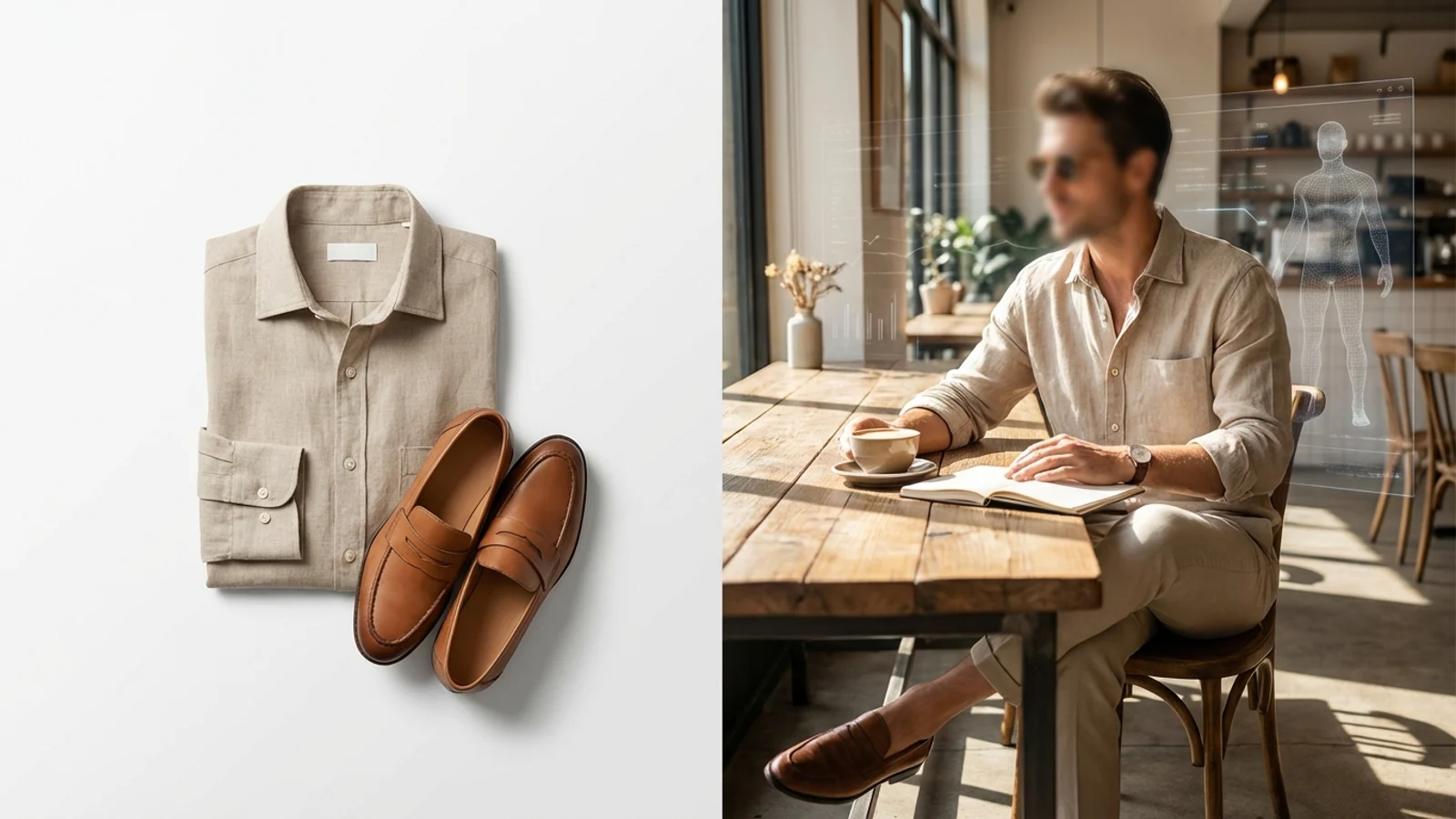
Flat-Lay vs. Model Photo: Quick Comparison
| Criterion | Flat-Lay | Model (AutWorks) |
|---|---|---|
| Size / Proportion Perception | Weak | Strong |
| Mirror Neuron Activation | None | High |
| Self-Reference Effect | None | Yes |
| Return Risk Reduction | Low | High |
| Production Speed | Fast | Seconds with AutWorks |
| Cost | Low | Low with AutWorks |
Conclusion: Turn Science into Revenue
Using model photos is not just a visual preference, but a scientific strategy that optimizes conversion rates. When mirror neurons, self-reference effect, and mental ruler mechanisms work together, customers don’t just look at the product — they want to buy it.
With AutWorks, you can integrate this neuro-marketing power into your brand in seconds without bearing studio costs.
Start increasing your sales with AI-powered model photos. → Try Free Now
Why do model jewelry photos sell better than flat-lay?
Model images enable buyers to imagine the product on themselves through the mirror neuron mechanism. This mental simulation significantly increases purchase intention and trust perception compared to flat-lay photos.
How do you create model jewelry photos with AI?
Upload your product photo to AutWorks, choose from dozens of model options that match your brand identity. The system produces professional model images in seconds — no studio or photographer needed.
Do model photos reduce e-commerce return rates?
Yes. Model images show customers the product’s actual size and proportion. This “mental ruler” effect reduces disappointment returns related to size and dimensions. According to Turkey’s Ministry of Trade 2025 report, the leading cause of returns is product photos that don’t reflect reality.
This blog post was prepared by AutWorks. Citations have been verified using independent academic and official public sources. Last update: January 2026.
Sources